Common causes include international and local link congestion, poor ISP routing, packet loss, and high jitter, all of which directly lead to increased access latency and packet loss rates.
Slow response under high concurrency can occur due to CPU, IO, database locks, too many connections, or an exhausted thread pool.
Improper use of CDN, lack of caching, inadequate TCP/TLS configuration (such as too many handshakes or long certificate chains), and unreasonable load balancing strategies can all increase latency.
Is the observation delay at the “network level” or the “application level”?”: ping/traceroute vs application-side slow logs (slow queries, queues).
Collect RTT, packet loss rate, jitter, link bandwidth utilization, and BGP route change records. It is recommended to use tools such as ping, mtr, iperf, and BGPstream.
Metrics such as CPU, memory, disk I/O, upstream and downstream bandwidth, number of connections, thread pool/coordinator utilization, slow database queries, and queue length must all be collected and alerts set for them.
Using APM tools (such as Jaeger, Zipkin, New Relic) for trace tracking allows you to quickly determine whether the issue is due to network disruptions, slow backend processing, or slow third-party dependencies.
The sampling frequency and historical retention strategy need to be balanced, with alerts set based on percentiles (P95/P99) rather than the mean.
Use a CDN for static resources and edge requests, while leveraging Anycast IPs for key services to accelerate global routing and reduce cross-border RTT.
To evaluate existing upstream ISP paths, multi-line access, establishing direct connections with local major ISPs, or using better peering can be used to reduce detours.
Use Global Load Balancing (GSLB) to direct traffic to the optimal node based on user geography or performance metrics (latency/packet loss), avoiding single-point congestion.
Enable TCP Fast Open, tune the MTU, enable HTTP/2 or QUIC (where supported), and perform SSL/TLS termination at the edge to reduce backend overhead.
At the application level, use local memory caching (Redis/Memcached), page/fragment caching, and CDN caching to minimize backend overhead per request.
Enable long connections and HTTP Keep-Alive, upgrade to HTTP/2 or QUIC to reduce handshake and request latency ; Use a connection pool to optimize database access.
Optimize indexes, split tables/databases, separate read and write operations, and asynchronously handle time-consuming tasks (using message queues) to reduce response delays caused by synchronous dependencies.

Verify TCP backlog/ephemeral ports, Nginx/Apache worker count, and operating system network parameters (net.ipv4.tcp_* ) Is it reasonable.
A multi-region active-active deployment is adopted, combined with GSLB or DNS traffic control, to enable proximity access and automatic failover, thereby reducing the impact of failures in a single region.
Implement metric-based auto-scaling (CPU, request rate, queue length), and combine it with warm-up and sliding window strategies to reduce jitter.
Establish ongoing stress testing and chaos engineering practices, quantify SLAs, use P95/P99 latency as evolution targets, and conduct regular regression tests.
A trade-off must be made between performance and cost: Choose edge nodes, CDN tiers, and bandwidth peak strategies wisely, and develop tiered service plans to control costs.
- Latest articles
- Enterprises Expanding Markets To Sell Servers To Vietnam With Localized Pricing And After-sales System Setup
- How To Test CN2 Japan Link Quality And Generate Visual Reports
- Illustrated Guide To Setting Up IPs For Singapore Servers, Completing Network Segment Routing And Firewall Configuration
- Key Points For Disaster Recovery Switching And Load Balancing Design For VPS Nodes At The Vietnamese Node In Enterprise-level Architectures
- How To Determine How Much To Rent A VPS In Korea Based On Business Scale And Match Performance Requirements
- Vietnamese CN2 Service Provider: Price And Service Comparison To Help You Choose Quickly
- How Do Enterprises Assess The Time It Takes For Tencent Cloud Singapore Servers To Recover After A Failure?
- Guidance On The Application Of Korean IP Native In SEO And Refined Promotion Operations
- Cross-server StarCraft Battle, Creating A Room, Choosing A Korean Server, Multi-country Player Experience Analysis
- Consider Multi-region Backups: Which Cloud Server In Taiwan Is Recommended With Excellent Disaster Recovery Capabilities?
- Popular tags
-
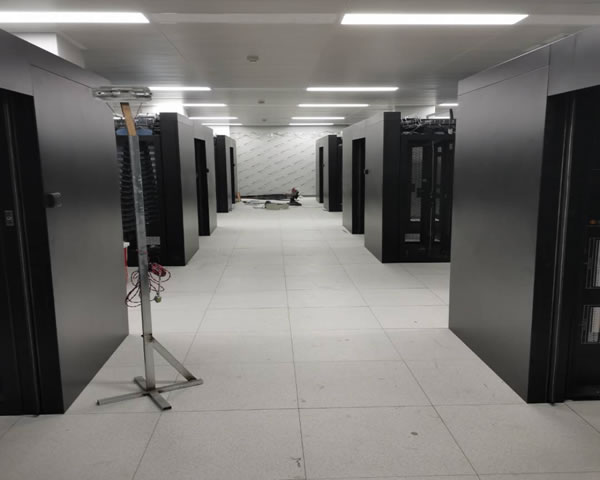
Bytedance’s Server Layout In Singapore And Its Impact
this article explores bytedance’s server footprint in singapore and its impact on business operations and cybersecurity. -

Analysis Of Strength On Singapore Server LOL To Understand Your Gaming Experience
In-depth analysis of the strength of the LOL Singapore server, understanding its impact on the gaming experience, and recommending DeXun Telecommunications' premium services. -
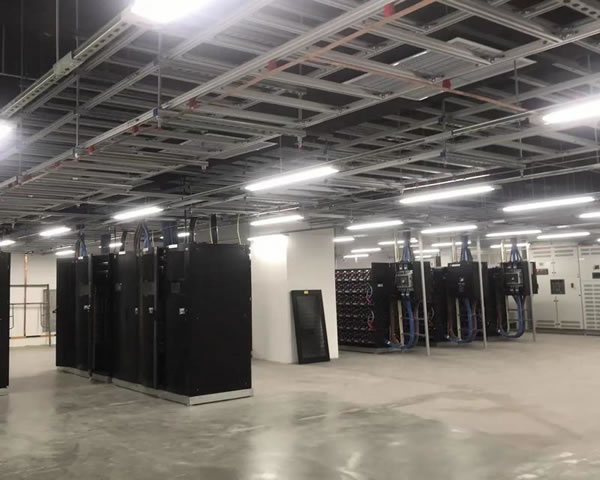
Reasons And Recommendations For Personal Use Of Singapore Cloud Servers
this article explores personal reasons and recommendations for using singapore cloud servers, including server configuration, performance, stability and real case analysis.